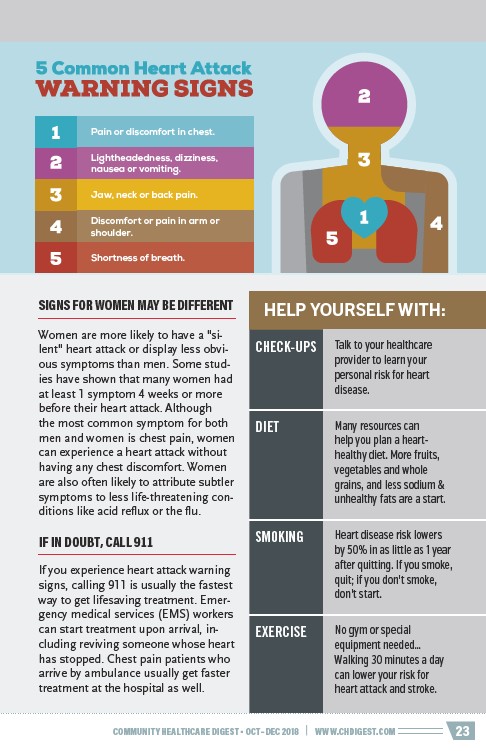
Pain or discomfort in chest.
Lightheadedness, dizziness,
nausea or vomiting.
Jaw, neck or back pain.
Discomfort or pain in arm or
shoulder.
Shortness of breath.
SIGNS FOR WOMEN MAY BE DIFFERENT
Women are more likely to have a "silent"
heart attack or display less obvious
symptoms than men. Some studies
have shown that many women had
at least 1 symptom 4 weeks or more
before their heart attack. Although
the most common symptom for both
men and women is chest pain, women
can experience a heart attack without
having any chest discomfort. Women
are also often likely to attribute subtler
symptoms to less life-threatening conditions
like acid reflux or the flu.
IF IN DOUBT, CALL 911
If you experience heart attack warning
signs, calling 911 is usually the fastest
way to get lifesaving treatment. Emergency
medical services (EMS) workers
can start treatment upon arrival, including
reviving someone whose heart
has stopped. Chest pain patients who
arrive by ambulance usually get faster
treatment at the hospital as well.
HELP YOURSELF WITH:
CHECK-UPS Talk to your healthcare
provider to learn your
personal risk for heart
disease.
DIET Many resources can
help you plan a hearthealthy
diet. More fruits,
vegetables and whole
grains, and less sodium &
unhealthy fats are a start.
SMOKING Heart disease risk lowers
by 50% in as little as 1 year
after quitting. If you smoke,
quit; if you don't smoke,
don't start.
EXERCISE No gym or special
equipment needed…
Walking 30 minutes a day
can lower your risk for
heart attack and stroke.
COMMUNITY HEALTHCARE DIGEST • OCT–DEC 2018 | WWW.CHDIGEST.COM 23
/WWW.CHDIGEST.COM