4. 5.
not always accessible solution for many different reasons.
We should not gloss over the impact of the social relationship
on the horses’ psyche. Instead, we should make it an
important part of the horses’ weekly schedule.
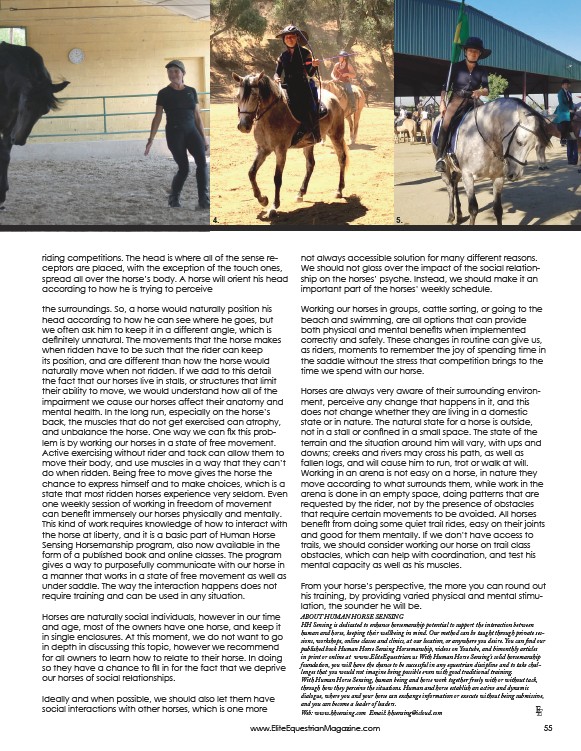
Working our horses in groups, cattle sorting, or going to the
beach and swimming, are all options that can provide
both physical and mental benefits when implemented
correctly and safely. These changes in routine can give us,
as riders, moments to remember the joy of spending time in
the saddle without the stress that competition brings to the
time we spend with our horse.
Horses are always very aware of their surrounding environment,
does not change whether they are living in a domestic
state or in nature. The natural state for a horse is outside,
not in a stall or confined in a small space. The state of the
terrain and the situation around him will vary, with ups and
downs; creeks and rivers may cross his path, as well as
fallen logs, and will cause him to run, trot or walk at will.
Working in an arena is not easy on a horse, in nature they
move according to what surrounds them, while work in the
arena is done in an empty space, doing patterns that are
requested by the rider, not by the presence of obstacles
that require certain movements to be avoided. All horses
benefit from doing some quiet trail rides, easy on their joints
and good for them mentally. If we don’t have access to
trails, we should consider working our horse on trail class
obstacles, which can help with coordination, and test his
mental capacity as well as his muscles.
From your horse’s perspective, the more you can round out
his training, by providing varied physical and mental stimulation,
��������������������������������������������������
������������������������������������������������������������������������������������������������������������������������������������������������������������������������������������������
����������������������������������������������������������������������������������������������������������������������������������������������������������������������������������������������
��������������������������������������������������������������������������������������������������������������������������������������������������������������������������������������������������������������
��������������������������������������������������������������������������������������������������������������������������������������������������������������������������������������
����������������������������������������������������������������������������������������������������������������������������������������������������������������������������������������
��������������������������������������������������������������������������������������������������������������������������������������������������������������������������������������������������������
������������������������������������������������������������������������������������������������������������������������������������������������������������������������������
��������������������������������������������������������������������������������������������������������������������������������������������������������������������������������������
������������������������������������������������������������������������������������������������������������������������������������������������������������������������������������
��������������������������������������������������������������������������������������������������������������������������������������������������������������������������������������������������
��������������������������������������������������������������������������������
��������������������������������������������������������������������������������������������������������
EE
riding competitions. The head is where all of the sense receptors
are placed, with the exception of the touch ones,
spread all over the horse’s body. A horse will orient his head
according to how he is trying to perceive
the surroundings. So, a horse would naturally position his
head according to how he can see where he goes, but
we often ask him to keep it in a different angle, which is
definitely unnatural. The movements that the horse makes
when ridden have to be such that the rider can keep
its position, and are different than how the horse would
naturally move when not ridden. If we add to this detail
the fact that our horses live in stalls, or structures that limit
their ability to move, we would understand how all of the
impairment we cause our horses affect their anatomy and
mental health. In the long run, especially on the horse’s
back, the muscles that do not get exercised can atrophy,
and unbalance the horse. One way we can fix this problem
is by working our horses in a state of free movement.
Active exercising without rider and tack can allow them to
move their body, and use muscles in a way that they can’t
do when ridden. Being free to move gives the horse the
chance to express himself and to make choices, which is a
state that most ridden horses experience very seldom. Even
one weekly session of working in freedom of movement
can benefit immensely our horses physically and mentally.
This kind of work requires knowledge of how to interact with
the horse at liberty, and it is a basic part of Human Horse
Sensing Horsemanship program, also now available in the
form of a published book and online classes. The program
gives a way to purposefully communicate with our horse in
a manner that works in a state of free movement as well as
under saddle. The way the interaction happens does not
require training and can be used in any situation.
Horses are naturally social individuals, however in our time
and age, most of the owners have one horse, and keep it
in single enclosures. At this moment, we do not want to go
in depth in discussing this topic, however we recommend
for all owners to learn how to relate to their horse. In doing
so they have a chance to fill in for the fact that we deprive
our horses of social relationships.
Ideally and when possible, we should also let them have
social interactions with other horses, which is one more
perceive any change that happens in it, and this
the sounder he will be.
www.EliteEquestrianMagazine.com 55
/www.EliteEquestrianMagazine.com