Write It Down
The guns have cooled, the brass collected and now comes
the hard part–the paperwork. We’ve all heard it said, “If
it’s not in writing, it didn’t happen.” That may not be true
every time, but you can bet when your career is on the line, no
one will care about your memory recall, how you typically train
or what you intended to accomplish. Along with witnesses, which
may be years removed from the training event, they’ll rest their
case on your training documentation, or the lack of it. And when
we can’t produce anything more than a POST entry, it’ll be time to
count the zeros when writing the check. And some of those zeros
may come from you personally, not just the agency or its insurance
carrier.
It’s easy to be misunderstood, especially in writing. Who hasn’t
sent an email that made perfectly good sense to you, only to
be misinterpreted by the reader, usually with less than glorious
results? Since writing can be ambiguous, we must rely on quality
written documentation that clearly outlines the intent and effect
of our training actions. While it can be hard to commit the time
required to produce training documentation, you can avoid a lot of
future stress by creating a quality record that will be effective on
its own merit, without interpretation.
Consistency is vital to success, whether in what you write
or what you say. Before you start the training effort, consider
a template that keeps you consistent. Use the same format for
creating each portion of your training documentation such as
lesson ideas/plans, after action reports, roster development,
etc. It’ll keep you focused even when the information becomes
complex. Here’s a format familiar to all law enforcement. The
����������������������������������������������������������������������������������������������������������������
training you, what are you training, when are you training, where
������������������������������������������������������������������������������������������������������������������������������
������������������������������������������������������������������������������������������������������������������������������������
����������������������������������������������������������������������������������������������������������������������������
complex machine to perform a simple task.
Also use that format when you teach. Practice your procedure.
We’ve all sat under instructors who either didn’t know the topic or
couldn’t clearly explain it. Either way, we spent more time being
frustrated than learning. Know the topic and rehearse its delivery.
Then, you can document it in a way that isn’t contradictory to your
delivery. If your teaching doesn’t match the plan, the ice can start
getting thin. Remember, students will be subpoenaed as witnesses
and they’ll remember your instruction, not your plan.
I have found that most of my training efforts can be
encompassed in four documents; lesson plan, course roster, student
performance sheet and training synopsis.
Lesson Plan
Believe it or not, most law enforcement training is conducted
without a formal lesson plan. A few ideas, maybe a goal in mind
and some ammo, then off to the range. Fun, but not effectively
defensible. A formal, primary lesson plan should be completed
for each major topic. Note that I said for each MAJOR topic, not
EVERY topic. Re-use the primary plan to conduct other training
���� | August 2019 | Real Hero Report
sessions, or sub-sessions. Update it as needed and use it as a
reference in future session material. Of course, each lesson plan
must include the topic of interest, goal of the courses, student
objectives, performance expectations, pass/fail criteria, instructor
notes and resource/research material. In other words, what am
I trying to achieve and how am I going to do it? Now use the
primary lesson plan as your reference for spin-off sessions, as
long as the currently taught material is in the primary plan and you
record the primary as your source.
Course Roster and Student Performance Sheet
Everybody knows this, but let’s say it again; these are different
and equally important items. If properly executed, these two items
could save a lot of heartache when reviewed years or decades
after the training event. The course roster should not give session
content but instead document the topic, who was there and under
����������������������������������������������������������������������������������������������������������������������������
title, the date and time duration, course codes for training credit,
instructor names, and individual results (pass, fail, remediate, etc.).
Student performance sheets for each participant are just as
important to properly protect the training effort. My performance
sheets include the session topic, date/time, assignment of
participant (uniform, detective, admin, etc.), details such as
��������������������������������������������������������������������������������������������������������������������������������
skills completed. In the skills section, I include every primary
skill taught and performed. This could get lengthy but it will help
you easily identify the basic skills taught in each session. This
information stays on the student performance sheet, and easily
matches the more detailed synopsis.
Training Synopsis
����������������������������������������������������������������������������������������������������������������������������
session documentation. It is here that I detail the plans and
activities of the session in an easily readable format that will make
sense to a reader far removed from the session. The synopsis
is written in a way that allows anyone to know exactly what
the training session accomplished without reviewing any other
documents or talking to a student. The synopsis’ I write includes
the topic, date/time, location, environmental conditions and special
equipment used like vehicles, clothing-type for non-uniform
��������������������������������������������������������������������������������������������������������������������������������������������
synopsis, as are legal rulings and department policies that were
included as part of the class. Your synopsis can list anything you
believe necessary to adequately record the session.
The greatest benefactor of proper documentation is me. It is
from these permanent and detailed records of training sessions that
I have created, conducted or hosted that I will stand upon, whether
����������������������������������������������������������������������������������������������������������������������������
��������������������������������������������������������������������������������������������������������������������������������������
at me and all that stand behind me such as my family, home and
����������������������������������������������������������������������������������������������������������������������������������������
failure to document claim.
Your life may depend on your training but your future may
depend on your documentation. The job is not over until the
paperwork is done, so Write It Down.
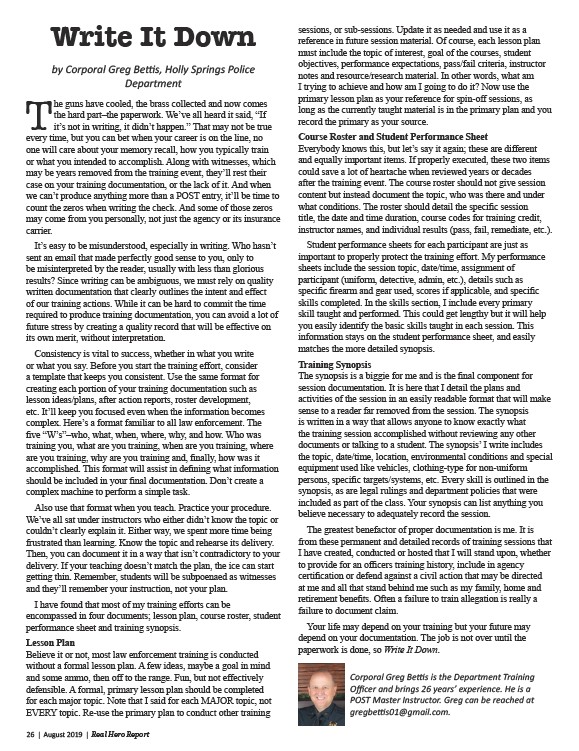
����������������������������������������������������������������������������������������
��������������������
��������������������������������������������������������������������������������������������
����������������������������������������������������������������������������������������������
����������������������������������������������������������������������������������������������
������������������������������������������