Kidney Cancer Journal 77
to progression (5 vs 3 months)
and median duration of survival
(17 vs 7 months) were significantly
better in patients
receiving combined CN and
IFN treatment vs IFN alone.
Both of the above mentioned
trials found that systemic
therapy in the era of interferon
therapy could be given
safely to patients at a short interval
after nephrectomy.
Both studies also addressed
prognostic factors that seemed
to affect outcomes, including
especially performance
status, lung only metastases,
liver metastases and bulky retroperitoneal
lymphadenopathy.
3,4 Additional reports in
the literature studied other
risk factors that might also be
useful in selecting patients
less suitable for CN, including
LDH > 600, albumin < 3.5,
liver metastases, and retroperitoneal
lymphadenopathy.5
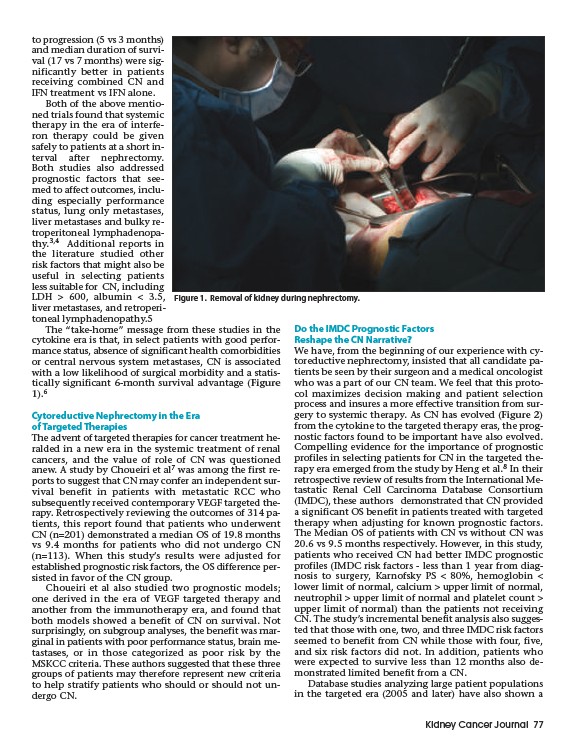
Figure 1. Removal of kidney during nephrectomy.
The “take-home” message from these studies in the
cytokine era is that, in select patients with good performance
status, absence of significant health comorbidities
or central nervous system metastases, CN is associated
with a low likelihood of surgical morbidity and a statistically
significant 6-month survival advantage (Figure
1).6
Cytoreductive Nephrectomy in the Era
of Targeted Therapies
The advent of targeted therapies for cancer treatment heralded
in a new era in the systemic treatment of renal
cancers, and the value of role of CN was questioned
anew. A study by Choueiri et al7 was among the first reports
to suggest that CN may confer an independent survival
benefit in patients with metastatic RCC who
subsequently received contemporary VEGF targeted therapy.
Retrospectively reviewing the outcomes of 314 patients,
this report found that patients who underwent
CN (n=201) demonstrated a median OS of 19.8 months
vs 9.4 months for patients who did not undergo CN
(n=113). When this study’s results were adjusted for
established prognostic risk factors, the OS difference persisted
in favor of the CN group.
Choueiri et al also studied two prognostic models;
one derived in the era of VEGF targeted therapy and
another from the immunotherapy era, and found that
both models showed a benefit of CN on survival. Not
surprisingly, on subgroup analyses, the benefit was marginal
in patients with poor performance status, brain metastases,
or in those categorized as poor risk by the
MSKCC criteria. These authors suggested that these three
groups of patients may therefore represent new criteria
to help stratify patients who should or should not undergo
CN.
Do the IMDC Prognostic Factors
Reshape the CN Narrative?
We have, from the beginning of our experience with cytoreductive
nephrectomy, insisted that all candidate patients
be seen by their surgeon and a medical oncologist
who was a part of our CN team. We feel that this protocol
maximizes decision making and patient selection
process and insures a more effective transition from surgery
to systemic therapy. As CN has evolved (Figure 2)
from the cytokine to the targeted therapy eras, the prognostic
factors found to be important have also evolved.
Compelling evidence for the importance of prognostic
profiles in selecting patients for CN in the targeted therapy
era emerged from the study by Heng et al.8 In their
retrospective review of results from the International Metastatic
Renal Cell Carcinoma Database Consortium
(IMDC), these authors demonstrated that CN provided
a significant OS benefit in patients treated with targeted
therapy when adjusting for known prognostic factors.
The Median OS of patients with CN vs without CN was
20.6 vs 9.5 months respectively. However, in this study,
patients who received CN had better IMDC prognostic
profiles (IMDC risk factors - less than 1 year from diagnosis
to surgery, Karnofsky PS < 80%, hemoglobin <
lower limit of normal, calcium > upper limit of normal,
neutrophil > upper limit of normal and platelet count >
upper limit of normal) than the patients not receiving
CN. The study’s incremental benefit analysis also suggested
that those with one, two, and three IMDC risk factors
seemed to benefit from CN while those with four, five,
and six risk factors did not. In addition, patients who
were expected to survive less than 12 months also demonstrated
limited benefit from a CN.
Database studies analyzing large patient populations
in the targeted era (2005 and later) have also shown a