Know the Hazards
Flooding is the most common natural disaster
in the United States. With many low-lying
areas, the St. Johns River, and other waterways,
������������ �������������� ������ �������������� ������ ���������� �������� ����������������
regardless of whether a tropical cyclone is
������������������ �������� ������������ �������� �������������� ������ ���� ������������������
cyclone can vary depending on the amount of
rainfall, wind intensity, high or low tide, storm
surge, and wave characteristics.
�������� �������� ������������ ������������ ���������� ������������ �������������� ��������
Atlantic Ocean. As a storm approaches, water
begins to back up the river, slowing down its
������������������������������������������������������������������������������������������
������������ �������� �������������������� ���������������������� ���������������� ������ ����
major threat.
FLOODWATER FACTS
• Six inches of
moving water can
knock over an
adult
• Two feet of
moving water can
carry away most
vehicles
• Floodwater can be electrically charged
and very dangerous if there are downed
powerlines
• Floodwater can contain debris, sharp
objects, sewage, and microorganisms
• Floodwater can hide holes or other
hazards under its surface
EVACUATION����ONES��AND����LOOD����ONES��ARE��NOT��THE��SAME��THING��
City of Jacksonville Emergency Preparedness Guide ����
HURRICANES��&
TROPICAL��STORMS
Tropical disturbances, tropical depressions, tropical storms,
������������������������������������������������������������������������������������������������������������������������
������������ �������� �������������������� ������ ������������ ���������������� �������������������� ����������������
wind speed. Tropical cyclones are rotating low-pressure
systems that form over warm tropical water.
Tropical storms and hurricanes are among the most
dangerous risks to Duval County. Hurricane season is June
����������������������������������������������������������������������������������������������������������������
throughout the year.
��LOODING
WATCH: TROPICAL STORM OR HURRICANE CONDITIONS ARE
������������������������������������������������������������������������������
WARNING: TROPICAL STORM OR HURRICANE CONDITIONS
��������������������������������������������������������������������������������������������
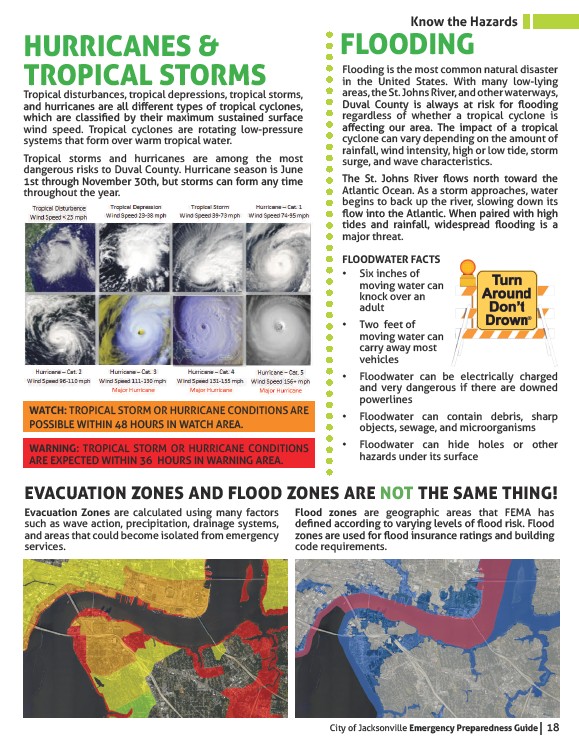
Evacuation Zones are calculated using many factors
such as wave action, precipitation, drainage systems,
and areas that could become isolated from emergency
services.
Flood zones are geographic areas that FEMA has
��������������������������������������������������������������������������������������������������������������
��������������������������������������������������������������������������������������������������������������
code requirements.