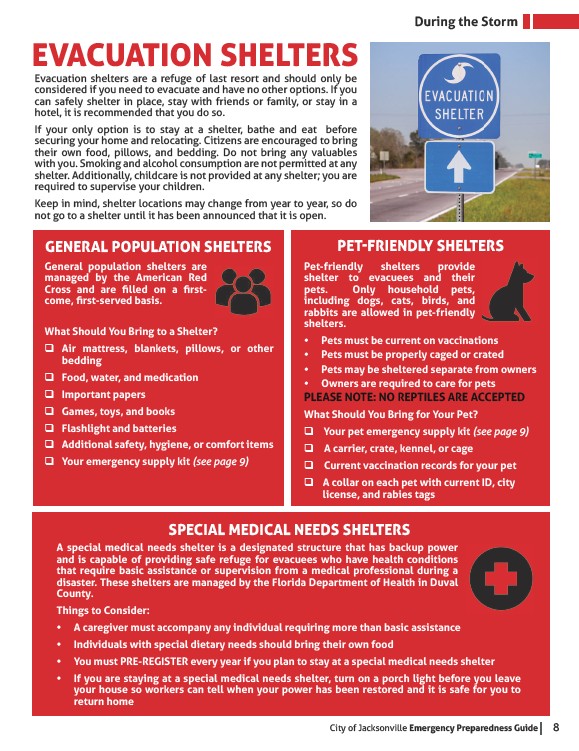
E��ACUATION��SHE��TERS
Evacuation shelters are a refuge of last resort and should only be
considered if you need to evacuate and have no other options. If you
can safely shelter in place, stay with friends or family, or stay in a
hotel, it is recommended that you do so.
If your only option is to stay at a shelter, bathe and eat before
securing your home and relocating. Citizens are encouraged to bring
their own food, pillows, and bedding. Do not bring any valuables
with you. Smoking and alcohol consumption are not permitted at any
shelter. Additionally, childcare is not provided at any shelter; you are
required to supervise your children.
Keep in mind, shelter locations may change from year to year, so do
not go to a shelter until it has been announced that it is open.
GENERA����POPU��ATION��SHE��TERS
General population shelters are
managed by the American Red
������������ �������� �������� ������������ ������ ���� ����������
��������������������������������������������������
SPECIA����MEDICA����NEEDS��SHE��TERS
During the Storm
A special medical needs shelter is a designated structure that has backup power
and is capable of providing safe refuge for evacuees who have health conditions
that require basic assistance or supervision from a medical professional during a
��������������������������������������������������������������������������������������������������������������������������������������������������������������������
����������������
Things to Consider:
• A caregiver must accompany any individual requiring more than basic assistance
• Individuals with special dietary needs should bring their own food
• You must PRE-REGISTER every year if you plan to stay at a special medical needs shelter
• If you are staying at a special medical needs shelter, turn on a porch light before you leave
your house so workers can tell when your power has been restored and it is safe for you to
return home
City of Jacksonville Emergency Preparedness Guide ��
What Should You Bring to a Shelter?
�� Air mattress, blankets, pillows, or other
bedding
�� Food, water, and medication
�� Important papers
�� Games, toys, and books
�� Flashlight and batteries
�� Additional safety, hygiene, or comfort items
�� Your emergency supply kit (see page 9)
PET����RIEND��Y��SHE��TERS
Pet-friendly shelters provide
shelter to evacuees and their
������������ �� ���������� �������������������� ������������
including dogs, cats, birds, and
rabbits are allowed in pet-friendly
����������������������
• Pets must be current on vaccinations
• Pets must be properly caged or crated
• Pets may be sheltered separate from owners
• Owners are required to care for pets
PLEASE NOTE: NO REPTILES ARE ACCEPTED
What Should You Bring for Your Pet?
�� Your pet emergency supply kit (see page 9)
����A carrier, crate, kennel, or cage
����Current vaccination records for your pet
�� A collar on each pet with current ID, city
license, and rabies tags