is usually only involved in the design of the simulation
spaces and not the supporting spaces, such as classroom,
meeting or office spaces, interaction with them may be
limited. However, it is important to coordinate needs with
the specialized equipment they plan to deploy.
Cable ramps or overfloor raceway can be used to prevent
trip hazards and protect cables extending from the
wall to the center of the room. Different ramp or raceway
sizes and configurations will be required depending
on the simulation because the pathway may have
to support more than just power and data.
ICT designers should be aware of the impact
the pathways could have on the transfer of noise into
and out of a simulation space, control room or debrief
room. Route pathways from a space where recording
is to occur to areas with less potential for noise. Avoid
public areas, such as elevator lobbies or where the students
gather to prepare for simulations. Sealed conduits
should be required instead of open cable baskets
to penetrate walls.
October/November/December 2020 I 73
horizontal cable used with the reels can be for the same
system used elsewhere. However, often the reels themselves
need specialty cable capable of standing up to the
stresses of being reeled and unreeled. Since these reels
often require special ordering, it may benefit the owner
to have a spare cable reel in case of failure.
Floor boxes for simulation spaces should be gasketed
because the floors in these areas will require more frequent
mopping than a typical classroom. Floors in simulation
rooms can be subject to splashing of fake blood
and simulated medications. A unified floor box solution,
where similar boxes are used in the simulation spaces
as elsewhere in the building, simplifies future MACs.
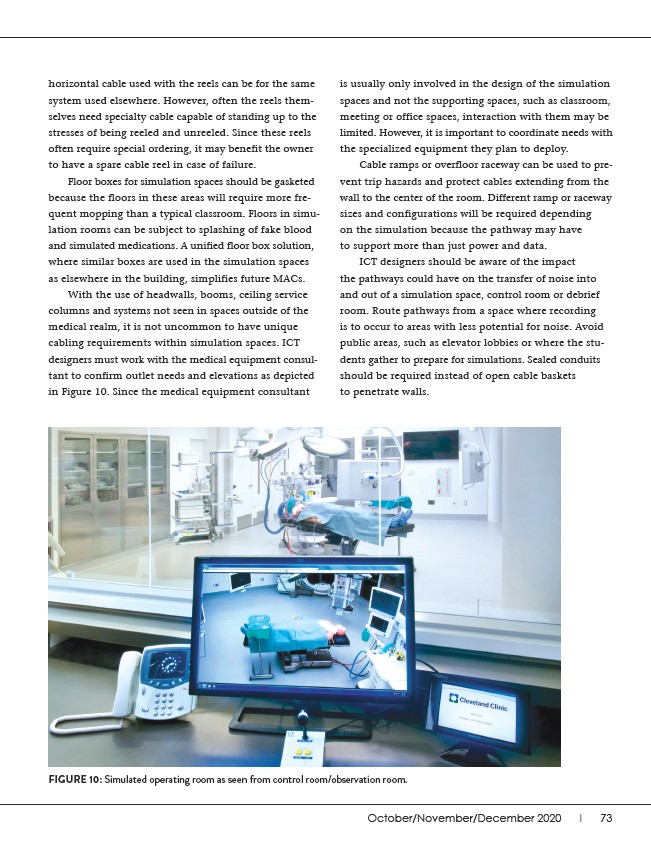
With the use of headwalls, booms, ceiling service
columns and systems not seen in spaces outside of the
medical realm, it is not uncommon to have unique
cabling requirements within simulation spaces. ICT
designers must work with the medical equipment consultant
to confirm outlet needs and elevations as depicted
in Figure 10. Since the medical equipment consultant
FIGURE 10: Simulated operating room as seen from control room/observation room.