5
Chapter 5 Dive Tables and Dive Computers 65
depth and dive time every few seconds and recalculate
nitrogen absorption over a range of theoretical tissue
compartments, divers enjoy extended dive times when
using a dive computer. In effect, the diver receives
“credit” for the shallow portions of the dive, which is not
possible with the “square-profile” assumptions of dive
tables. The first dive computers were designed only for
air diving, but with the popularity of enriched air nitrox
diving, every manufacturer now produces a line of nitrox
computers, and many also produce trimix-capable dive
computers for technical diving.
Currently, several manufacturers have incorporated
the NAUI RGBM algorithms as well as the NAUI Rule of
Halves into their dive computers.
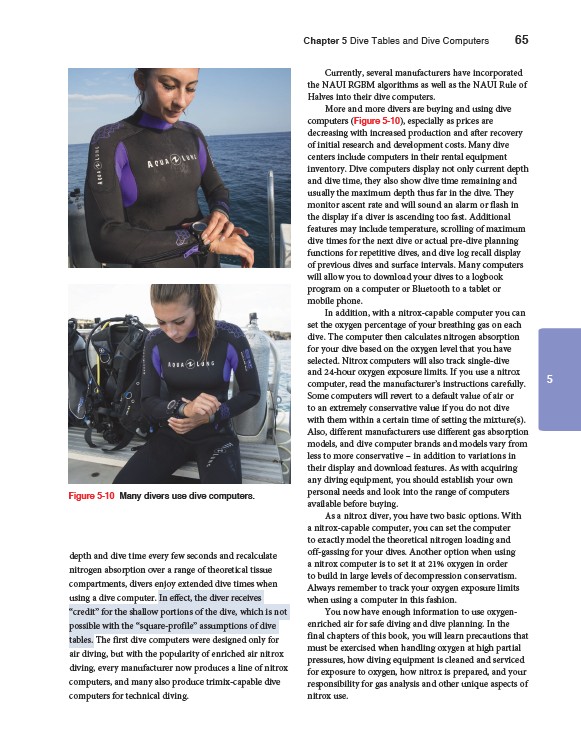
More and more divers are buying and using dive
computers (Figure 5-10), especially as prices are
decreasing with increased production and after recovery
of initial research and development costs. Many dive
centers include computers in their rental equipment
inventory. Dive computers display not only current depth
and dive time, they also show dive time remaining and
usually the maximum depth thus far in the dive. They
monitor ascent rate and will sound an alarm or flash in
the display if a diver is ascending too fast. Additional
features may include temperature, scrolling of maximum
dive times for the next dive or actual pre-dive planning
functions for repetitive dives, and dive log recall display
of previous dives and surface intervals. Many computers
will allow you to download your dives to a logbook
program on a computer or Bluetooth to a tablet or
mobile phone.
In addition, with a nitrox-capable computer you can
set the oxygen percentage of your breathing gas on each
dive. The computer then calculates nitrogen absorption
for your dive based on the oxygen level that you have
selected. Nitrox computers will also track single-dive
and 24-hour oxygen exposure limits. If you use a nitrox
computer, read the manufacturer’s instructions carefully.
Some computers will revert to a default value of air or
to an extremely conservative value if you do not dive
with them within a certain time of setting the mixture(s).
Also, different manufacturers use different gas absorption
models, and dive computer brands and models vary from
less to more conservative – in addition to variations in
their display and download features. As with acquiring
any diving equipment, you should establish your own
personal needs and look into the range of computers
available before buying.
As a nitrox diver, you have two basic options. With
a nitrox-capable computer, you can set the computer
to exactly model the theoretical nitrogen loading and
off-gassing for your dives. Another option when using
a nitrox computer is to set it at 21% oxygen in order
to build in large levels of decompression conservatism.
Always remember to track your oxygen exposure limits
when using a computer in this fashion.
You now have enough information to use oxygenenriched
air for safe diving and dive planning. In the
final chapters of this book, you will learn precautions that
must be exercised when handling oxygen at high partial
pressures, how diving equipment is cleaned and serviced
for exposure to oxygen, how nitrox is prepared, and your
responsibility for gas analysis and other unique aspects of
nitrox use.
Figure 5-10 Many divers use dive computers.