7
Chapter 7 Knowing What You Breathe 79
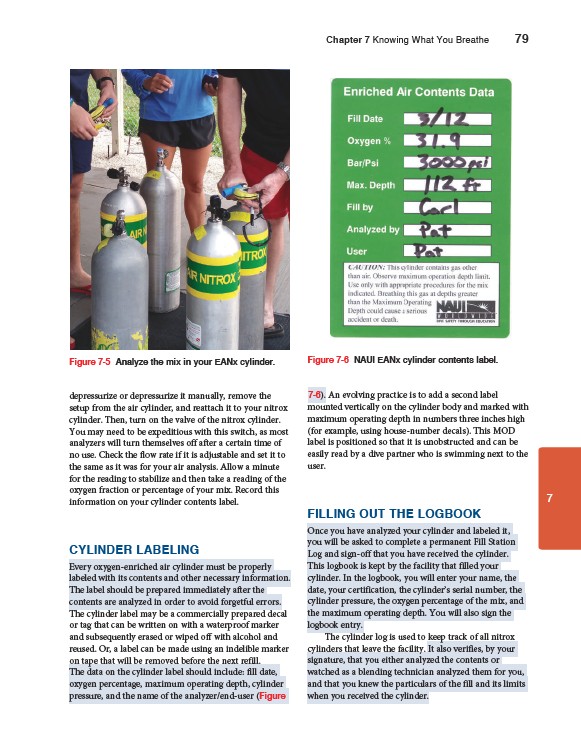
Figure 7-5 Analyze the mix in your EANx cylinder. Figure 7-6 NAUI EANx cylinder contents label.
depressurize or depressurize it manually, remove the
setup from the air cylinder, and reattach it to your nitrox
cylinder. Then, turn on the valve of the nitrox cylinder.
You may need to be expeditious with this switch, as most
analyzers will turn themselves off after a certain time of
no use. Check the flow rate if it is adjustable and set it to
the same as it was for your air analysis. Allow a minute
for the reading to stabilize and then take a reading of the
oxygen fraction or percentage of your mix. Record this
information on your cylinder contents label.
CYLINDER LABELING
Every oxygen-enriched air cylinder must be properly
labeled with its contents and other necessary information.
The label should be prepared immediately after the
contents are analyzed in order to avoid forgetful errors.
The cylinder label may be a commercially prepared decal
or tag that can be written on with a waterproof marker
and subsequently erased or wiped off with alcohol and
reused. Or, a label can be made using an indelible marker
on tape that will be removed before the next refill.
The data on the cylinder label should include: fill date,
oxygen percentage, maximum operating depth, cylinder
pressure, and the name of the analyzer/end-user (Figure
7-6). An evolving practice is to add a second label
mounted vertically on the cylinder body and marked with
maximum operating depth in numbers three inches high
(for example, using house-number decals). This MOD
label is positioned so that it is unobstructed and can be
easily read by a dive partner who is swimming next to the
user.
FILLING OUT THE LOGBOOK
Once you have analyzed your cylinder and labeled it,
you will be asked to complete a permanent Fill Station
Log and sign-off that you have received the cylinder.
This logbook is kept by the facility that filled your
cylinder. In the logbook, you will enter your name, the
date, your certification, the cylinder’s serial number, the
cylinder pressure, the oxygen percentage of the mix, and
the maximum operating depth. You will also sign the
logbook entry.
The cylinder log is used to keep track of all nitrox
cylinders that leave the facility. It also verifies, by your
signature, that you either analyzed the contents or
watched as a blending technician analyzed them for you,
and that you knew the particulars of the fill and its limits
when you received the cylinder.