6
Chapter 6 Oxygen Precautions and Preparing Nitrox 71
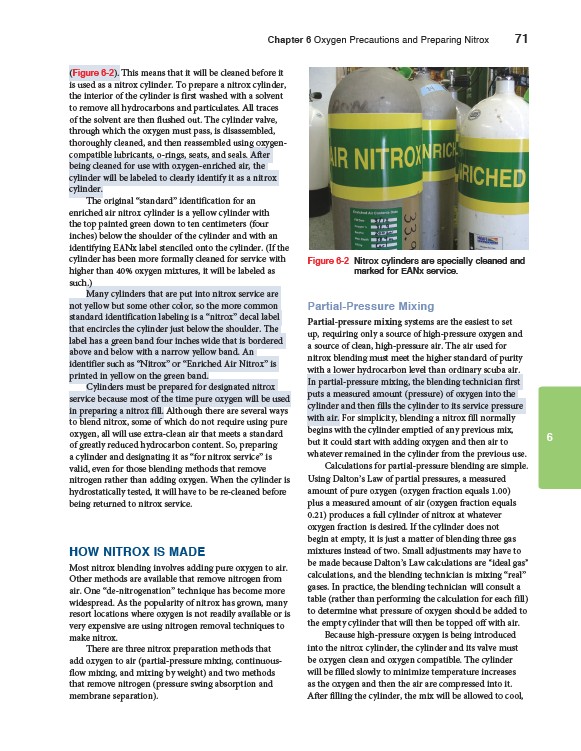
(Figure 6-2). This means that it will be cleaned before it
is used as a nitrox cylinder. To prepare a nitrox cylinder,
the interior of the cylinder is first washed with a solvent
to remove all hydrocarbons and particulates. All traces
of the solvent are then flushed out. The cylinder valve,
through which the oxygen must pass, is disassembled,
thoroughly cleaned, and then reassembled using oxygencompatible
lubricants, o-rings, seats, and seals. After
being cleaned for use with oxygen-enriched air, the
cylinder will be labeled to clearly identify it as a nitrox
cylinder.
The original “standard” identification for an
enriched air nitrox cylinder is a yellow cylinder with
the top painted green down to ten centimeters (four
inches) below the shoulder of the cylinder and with an
identifying EANx label stenciled onto the cylinder. (If the
cylinder has been more formally cleaned for service with
higher than 40% oxygen mixtures, it will be labeled as
such.)
Many cylinders that are put into nitrox service are
not yellow but some other color, so the more common
standard identification labeling is a “nitrox” decal label
that encircles the cylinder just below the shoulder. The
label has a green band four inches wide that is bordered
above and below with a narrow yellow band. An
identifier such as “Nitrox” or “Enriched Air Nitrox” is
printed in yellow on the green band.
Cylinders must be prepared for designated nitrox
service because most of the time pure oxygen will be used
in preparing a nitrox fill. Although there are several ways
to blend nitrox, some of which do not require using pure
oxygen, all will use extra-clean air that meets a standard
of greatly reduced hydrocarbon content. So, preparing
a cylinder and designating it as “for nitrox service” is
valid, even for those blending methods that remove
nitrogen rather than adding oxygen. When the cylinder is
hydrostatically tested, it will have to be re-cleaned before
being returned to nitrox service.
HOW NITROX IS MADE
Most nitrox blending involves adding pure oxygen to air.
Other methods are available that remove nitrogen from
air. One “de-nitrogenation” technique has become more
widespread. As the popularity of nitrox has grown, many
resort locations where oxygen is not readily available or is
very expensive are using nitrogen removal techniques to
make nitrox.
There are three nitrox preparation methods that
add oxygen to air (partial-pressure mixing, continuousflow
mixing, and mixing by weight) and two methods
that remove nitrogen (pressure swing absorption and
membrane separation).
Figure 6-2 Nitrox cylinders are specially cleaned and
marked for EANx service.
Partial-Pressure Mixing
Partial-pressure mixing systems are the easiest to set
up, requiring only a source of high-pressure oxygen and
a source of clean, high-pressure air. The air used for
nitrox blending must meet the higher standard of purity
with a lower hydrocarbon level than ordinary scuba air.
In partial-pressure mixing, the blending technician first
puts a measured amount (pressure) of oxygen into the
cylinder and then fills the cylinder to its service pressure
with air. For simplicity, blending a nitrox fill normally
begins with the cylinder emptied of any previous mix,
but it could start with adding oxygen and then air to
whatever remained in the cylinder from the previous use.
Calculations for partial-pressure blending are simple.
Using Dalton’s Law of partial pressures, a measured
amount of pure oxygen (oxygen fraction equals 1.00)
plus a measured amount of air (oxygen fraction equals
0.21) produces a full cylinder of nitrox at whatever
oxygen fraction is desired. If the cylinder does not
begin at empty, it is just a matter of blending three gas
mixtures instead of two. Small adjustments may have to
be made because Dalton’s Law calculations are “ideal gas”
calculations, and the blending technician is mixing “real”
gases. In practice, the blending technician will consult a
table (rather than performing the calculation for each fill)
to determine what pressure of oxygen should be added to
the empty cylinder that will then be topped off with air.
Because high-pressure oxygen is being introduced
into the nitrox cylinder, the cylinder and its valve must
be oxygen clean and oxygen compatible. The cylinder
will be filled slowly to minimize temperature increases
as the oxygen and then the air are compressed into it.
After filling the cylinder, the mix will be allowed to cool,