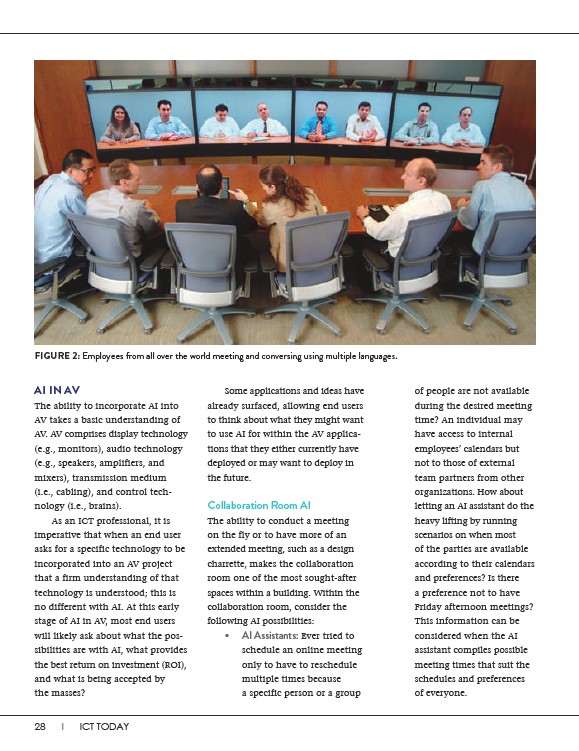
FIGURE 2: Employees from all over the world meeting and conversing using multiple languages.
AI IN AV
The ability to incorporate AI into
AV takes a basic understanding of
AV. AV comprises display technology
(e.g., monitors), audio technology
(e.g., speakers, amplifiers, and
mixers), transmission medium
(i.e., cabling), and control tech-
nology (i.e., brains).
As an ICT professional, it is
imperative that when an end user
asks for a specific technology to be
incorporated into an AV project
that a firm understanding of that
technology is understood; this is
no different with AI. At this early
stage of AI in AV, most end users
will likely ask about what the possibilities
are with AI, what provides
the best return on investment (ROI),
and what is being accepted by
the masses?
28 I ICT TODAY
Some applications and ideas have
already surfaced, allowing end users
to think about what they might want
to use AI for within the AV applications
that they either currently have
deployed or may want to deploy in
the future.
Collaboration Room AI
The ability to conduct a meeting
on the fly or to have more of an
extended meeting, such as a design
charrette, makes the collaboration
room one of the most sought-after
spaces within a building. Within the
collaboration room, consider the
following AI possibilities:
• AI Assistants: Ever tried to
schedule an online meeting
only to have to reschedule
multiple times because
a specific person or a group
of people are not available
during the desired meeting
time? An individual may
have access to internal
employees’ calendars but
not to those of external
team partners from other
organizations. How about
letting an AI assistant do the
heavy lifting by running
scenarios on when most
of the parties are available
according to their calendars
and preferences? Is there
a preference not to have
Friday afternoon meetings?
This information can be
considered when the AI
assistant compiles possible
meeting times that suit the
schedules and preferences
of everyone.