January/February 2019 I������11
1 mm. Because 802.11ad uses 60 GHz,
it is often referred to as millimeter
wave radio, but more commonly
known as WiGig. WiGig does not
address millimeter wave short
haul systems.
802.11ad: This is amendment 3
to the IEEE Standard 802.11-2012,
providing enhancements for “very
high throughput in the 60 GHz
band” (57-64 GHz within the IEEE
designated V-band). This band is
governed by a separate set of FCC
rules (47 CFR part 15), which is
unlicensed and not considered ISM
or U-NII. The 802.11ad specification
has been developed by two distinct
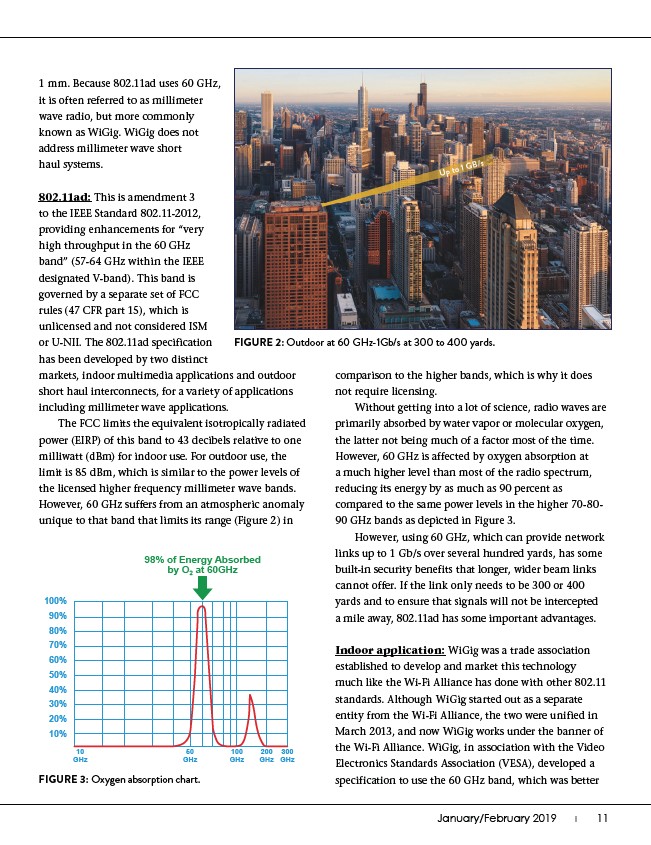
FIGURE 2: Outdoor at 60 GHz-1Gb/s at 300 to 400 yards.
100%
90%
80%
70%
60%
50%
40%
30%
10%
10
GHz
98% of Energy Absorbed
by O2 at 60GHz
50
GHz
100
GHz
200
GHz
300
GHz
20%
FIGURE 3: Oxygen absorption chart.
comparison to the higher bands, which is why it does
not require licensing.
Without getting into a lot of science, radio waves are
primarily absorbed by water vapor or molecular oxygen,
the latter not being much of a factor most of the time.
However, 60 GHz is affected by oxygen absorption at
a much higher level than most of the radio spectrum,
reducing its energy by as much as 90 percent as
compared to the same power levels in the higher 70-80-
90 GHz bands as depicted in Figure 3.
However, using 60 GHz, which can provide network
links up to 1 Gb/s over several hundred yards, has some
built-in security benefits that longer, wider beam links
cannot offer. If the link only needs to be 300 or 400
yards and to ensure that signals will not be intercepted
a mile away, 802.11ad has some important advantages.
Indoor application: WiGig was a trade association
established to develop and market this technology
much like the Wi-Fi Alliance has done with other 802.11
standards. Although WiGig started out as a separate
entity from the Wi-Fi Alliance, the two were unified in
March 2013, and now WiGig works under the banner of
the Wi-Fi Alliance. WiGig, in association with the Video
Electronics Standards Association (VESA), developed a
specification to use the 60 GHz band, which was better
markets, indoor multimedia applications and outdoor
short haul interconnects, for a variety of applications
including millimeter wave applications.
The FCC limits the equivalent isotropically radiated
power (EIRP) of this band to 43 decibels relative to one
milliwatt (dBm) for indoor use. For outdoor use, the
limit is 85 dBm, which is similar to the power levels of
the licensed higher frequency millimeter wave bands.
However, 60 GHz suffers from an atmospheric anomaly
unique to that band that limits its range (Figure 2) in